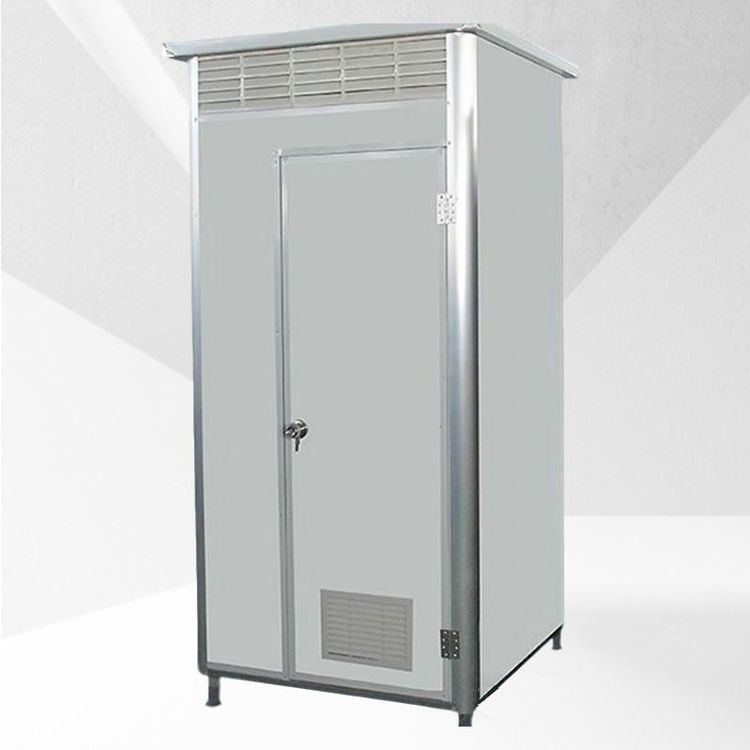
Anhui Municipal Mobile Toilet Design
The design of Anhui municipal mobile toilets centers around a modular framework, integrating functionality and adaptability requirements to form a standardized and flexible solution.

1. Structure and Materials: Lightweight and High-Strength
The main frame of Anhui municipal mobile toilets adopts a modular design, with the bottom welded using channel steel or I-beams and the columns using square steel to ensure overall structural stability and meet lifting requirements. The main materials are high-strength, lightweight, and corrosion-resistant composites, such as fiberglass, color-coated steel plates, or galvanized square tubes, which reduce self-weight for easy transportation and extend service life. The internal space layout is compact yet fully functional, equipped with standard蹲便 (squat toilets) or坐便器 (sit toilets), washbasins, storage racks, and other facilities. High-end models also include lighting, ventilation fans, independent ventilation systems, and emergency call systems, balancing practicality and humanization needs.
2. Sewage Disposal System: Categorized Treatment for Different Scenarios
The sewage disposal design includes two modes: storage-type and circulating water flushing. Storage-type mobile toilets are equipped with large-capacity sealed sewage storage tanks at the bottom, requiring regular pumping and cleaning by professional vehicles, suitable for temporary locations without sewer access. Circulating water flushing systems achieve water recycling through small water tanks and filtration and disinfection systems, significantly saving water and suitable for areas with water scarcity or high environmental protection requirements. For example, in the renovation project of Hefei Changjiang Middle Road, 20 mobile toilets were distributed along the fences, adopting a storage-type design to meet sewage disposal needs during construction.
3. Adaptive Design: Meeting Complex Environmental Challenges
In response to Anhui's diverse terrain and variable climate, mobile toilets are designed with various adaptive solutions. In hilly or narrow road areas, trailer-type structures or hydraulic lifting systems are used to adjust height, ensuring stability. During rainy season construction, rainproof canopies, anti-slip floors, and drainage channels are added to prevent water accumulation. In winter, insulation materials and heating devices extend the applicable temperature range to -50℃ to 60℃, meeting usage needs under extreme climatic conditions. For example, trailer-type mobile toilets were used in the fence construction of Wuhu Chengdong New District, successfully adapting to hilly terrain; the pipeline renovation project in Yingjiang District, Anqing City, selected models with rainproof canopies to ensure construction safety during rainy days.
4. Hygiene and Epidemic Prevention: Meeting Municipal Engineering Standards
Professional leasing companies equip mobile toilets with odor control systems (such as U-shaped bends and activated carbon filtration) and disinfection facilities (such as ultraviolet lights and spray devices), combined with flushing designs, effectively inhibiting odor and pathogen transmission, meeting municipal engineering hygiene standards. This design is particularly important in crowded places such as stations, docks, and tourist attractions, reducing public health risks.
5. Appearance and Function: Customization and Scenario Integration
The appearance adopts simple lines and reasonable color matching, supporting customized shapes to blend into different environments. Functionally, in addition to basic configurations,母婴室 (maternity rooms), barrier-free facilities, or advertising spaces can be added according to needs, suitable for public places such as stations, docks, and large construction sites, enhancing urban image and service quality.