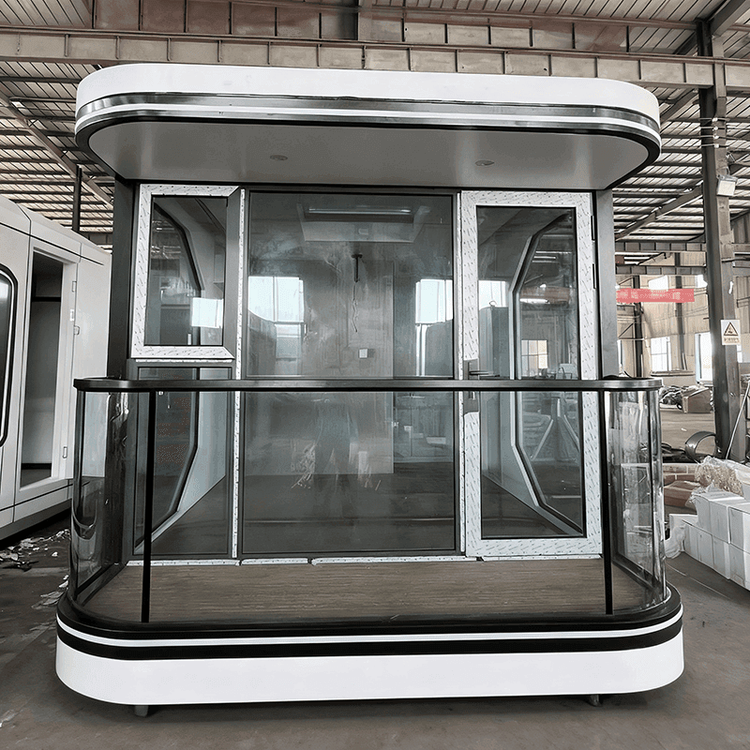
Ancient-Modern Design Mobile Toilet
The ancient-modern design mobile toilet is an innovative public facility that combines traditional aesthetics with modern environmental protection technology, featuring both cultural expression and practical functionality.
1. Antique-inspired exterior design: Modern expression of traditional aesthetics
These mobile toilets draw inspiration from traditional Chinese architectural elements, such as upturned eaves, carved window lattices, wooden textures, gray-tiled sloping roofs, or Tang-style colored paintings. Some designs also incorporate carved windows from Suzhou gardens, white walls and black tiles of Hui-style architecture, and hang ink paintings to create an antique atmosphere. This design seamlessly integrates with garden landscapes and even becomes a popular spot for tourists to take photos. For example, the customized antique toilet clusters in Hangzhou West Lake Scenic Area and Beijing Summer Palace incorporate regional cultural characteristics through the “one toilet, one landscape” approach, serving as vivid examples of the modern expression of traditional culture.
2. Environmental protection technology applications: Efficient energy conservation and pollution control
The core environmental protection technology includes a microbial degradation system that decomposes excrement into water and carbon dioxide without the need for flushing, achieving a pollutant removal rate of over 90% and significantly reducing water consumption and sewage discharge. Solar panels on the roof power the ventilation system, which works in conjunction with smart induction windows to ensure air circulation. In summer, the ammonia concentration inside the toilet is measured to be below 0.5ppm, far exceeding national standards. The floor is equipped with an automatic cleaning robot that uses laser induction technology to monitor equipment status in real-time and perform automatic cleaning, further reducing labor maintenance costs.
3. Humanized and intelligent design: Enhancing user experience
Details such as anti-slip tiles and antibacterial handles reduce cleaning and maintenance costs by 40%. Smart facilities like voice-activated and human-sensing lights, pit red-green light displays, and touchless faucets enhance convenience. The modular structure supports flexible layouts, allowing adjustments based on tourist seasons. The construction period is 80% shorter than that of traditional public toilets, and the toilets can be reused for over 10 years, balancing economy and sustainability.
4. Scene adaptation and cultural expression: Unity of function and aesthetics
Through customized design, each toilet incorporates the architectural characteristics of its location, such as local historical elements or natural landscapes, making public facilities carriers of cultural dissemination. This design not only addresses people's livelihood needs but also deeply integrates traditional aesthetics with modern functions through the “one toilet, one landscape” concept, injecting cultural vitality into public spaces.