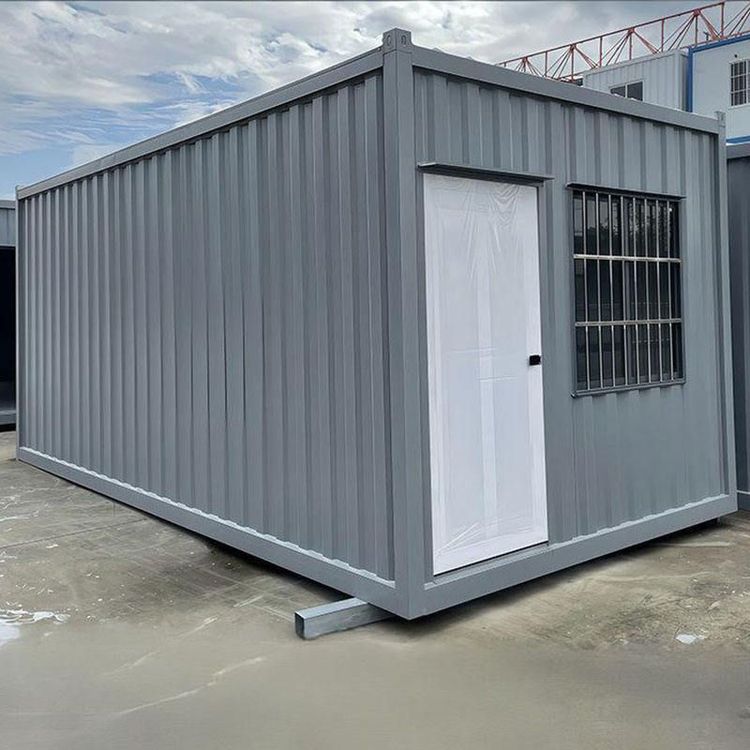
Aluminum Profiles for Mobile Toilets
The use of aluminum profiles in mobile toilets is mainly reflected in frame support, wall maintenance, rapid assembly and disassembly, and corrosion and moisture resistance. Their material properties and design techniques jointly ensure the durability and functionality of mobile toilets.

Frame Support: High Strength and Stability
Aluminum profiles are the core 'skeleton' material for mobile toilets, typically using 6000-series aluminum alloys (such as 6061 or 6063). These alloys combine high strength with good machinability, enabling them to bear the overall weight of the toilet and external loads. The frame design often employs 2020-specification aluminum profiles, achieving modular assembly through standardized components like three-way connectors, corner slot connectors, and threaded tube connectors, allowing for rapid structure construction without welding. The base is usually equipped with unidirectional casters and adjustable feet, with the former facilitating mobility and the latter enabling level adjustment to ensure stability on various terrains.
Wall Maintenance: Lightweight and Weather Resistance
The lightweight nature of aluminum profiles (with a density about one-third that of steel) significantly reduces the self-weight of mobile toilets, facilitating transportation and lifting. The wall sections often feature aluminum profile frames paired with composite panels (such as aluminum honeycomb panels or PVC panels), ensuring structural strength while providing thermal and acoustic insulation. In terms of surface treatment, fluorocarbon or powder coating forms a dense protective layer, enabling the coating to withstand salt spray for over 3000 hours, effectively resisting rain, UV rays, and chemical corrosion to meet long-term outdoor use requirements.
Rapid Assembly and Disassembly: Advantages of Modular Design
The standardization and modularity of aluminum profiles enable mass production and rapid assembly of mobile toilets. The frame is connected via bolts or clips, allowing for disassembly and reassembly without specialized tools, with a single person able to complete on-site deployment in under 2 hours. This design not only shortens construction cycles but also reduces labor costs, making it particularly suitable for temporary scenarios like emergency rescue and large-scale events.
Corrosion and Moisture Resistance: Adapting to Complex Environments
Aluminum profiles inherently possess natural corrosion resistance, with their surface oxide layer preventing oxygen and moisture from contacting the metal substrate. In humid or salt-laden environments (such as coastal areas), the coating process further enhances protective performance, preventing rust or deformation. Additionally, the non-absorbent and mildew-resistant properties of aluminum profiles reduce internal moisture issues, extending the toilet's service life.
In summary, aluminum profiles, through the combination of material properties and design innovation, have become an ideal structural material for mobile toilets, balancing functionality, economy, and environmental adaptability.