Aluminum Alloy Mobile Toilet Materials
Aluminum alloy mobile toilet materials have core advantages such as corrosion resistance, lightweight durability, ease of processing, environmental protection, energy efficiency, and aesthetic and health benefits. Detailed analysis is as follows:
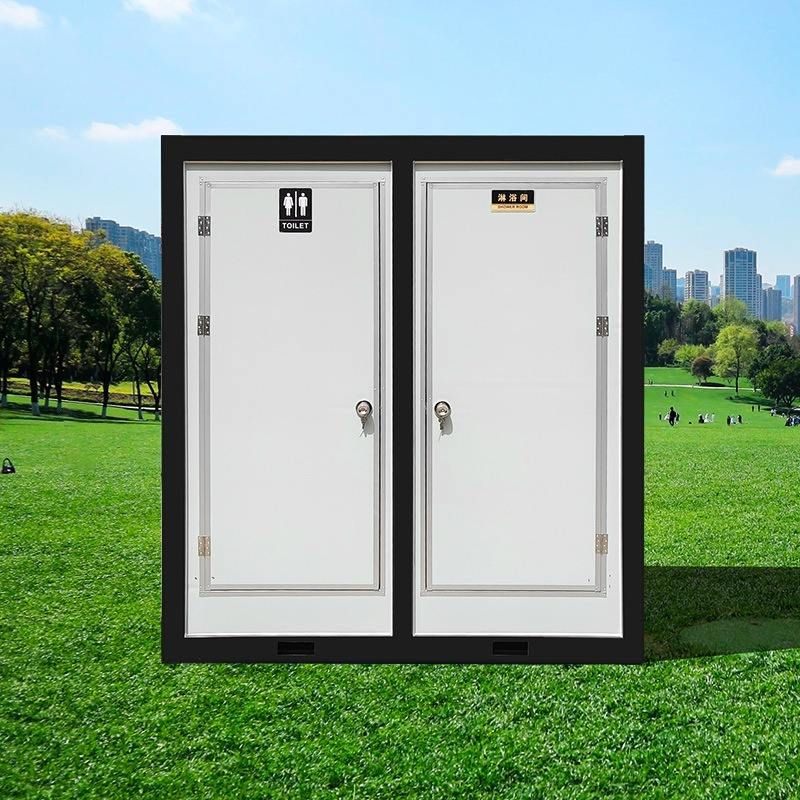
1. Strong Corrosion Resistance
Aluminum alloy naturally forms a dense oxide film on its surface, which can isolate water vapor and acid-base substances from erosion, preventing rust. After anodizing treatment, its corrosion resistance is significantly enhanced, passing a 3000-hour neutral salt spray test without corrosion marks, far exceeding traditional copper products (1000 hours). It is particularly suitable for southern coastal salt spray environments or northern hard water areas. Additionally, aluminum alloy does not react with chemicals such as cleaning agents and scale, reducing maintenance costs and extending service life.
2. Lightweight Design
The density of aluminum alloy is only 2.7g/cm³, which is one-third of copper and two-thirds of stainless steel. The weight of a single mobile toilet room with an aluminum alloy frame is reduced by 40% compared to traditional products, and transportation costs are reduced by 30%. The lightweight design reduces the requirements for load-bearing structures, allowing for single-person installation, suitable for scenarios such as old house renovations and temporary construction sites. For example, a manufacturer's 'building block' installation method can complete the rapid deployment of 10 restrooms in 2 hours.
3. High Strength and Toughness
By adding elements such as magnesium and silicon to enhance performance, the hardness of aluminum alloy can reach above HB120, withstanding 50,000 switch tests without deformation or leakage. The shower screen frame can withstand a load-bearing pressure of 80kg, far exceeding daily usage requirements. The surface is wear-resistant and scratch-resistant, suitable for high-frequency use in public places, reducing damage caused by collisions.
4. Ease of Processing
Aluminum alloy has a low melting point (about 660°C) and strong ductility, allowing it to be formed into complex shapes through processes such as extrusion, bending, and CNC precision cutting, such as curved shower screens and ultra-thin shelves, breaking the limitations of traditional materials in terms of shape. It supports small-batch customization to meet different decoration styles (such as modern simplicity and light luxury) and functional requirements (such as barrier-free toilet stalls and maternal and child facilities).
5. Environmental Protection and Energy Efficiency
Aluminum alloy is the only metal that can be infinitely recycled without affecting its performance, with recycling energy consumption being only 5% of that of primary aluminum. Producing 1 ton of recycled aluminum can save 12,000 kWh of electricity and reduce carbon dioxide emissions by 11 tons. Some aluminum alloy mobile toilets integrate solar panels and energy storage systems to achieve self-powering for lighting, ventilation, and deodorization systems, with an average daily power consumption of only 0.5 kWh per room, saving 70% energy compared to traditional products.
6. Combination of Aesthetics and Health
Through processes such as anodizing and electrophoretic coating, aluminum alloy can present various textures such as matte, brushed, and frosted, being fingerprint-resistant and scratch-resistant, requiring only a damp cloth for daily cleaning. High-quality aluminum alloy strictly controls the content of heavy metals such as lead and cadmium, complying with the national 'Safety Technical Requirements for Sanitary Products' and international NSF/ANSI 61 standards, suitable for scenarios with high health requirements such as maternal and child families and high-end hotels.