
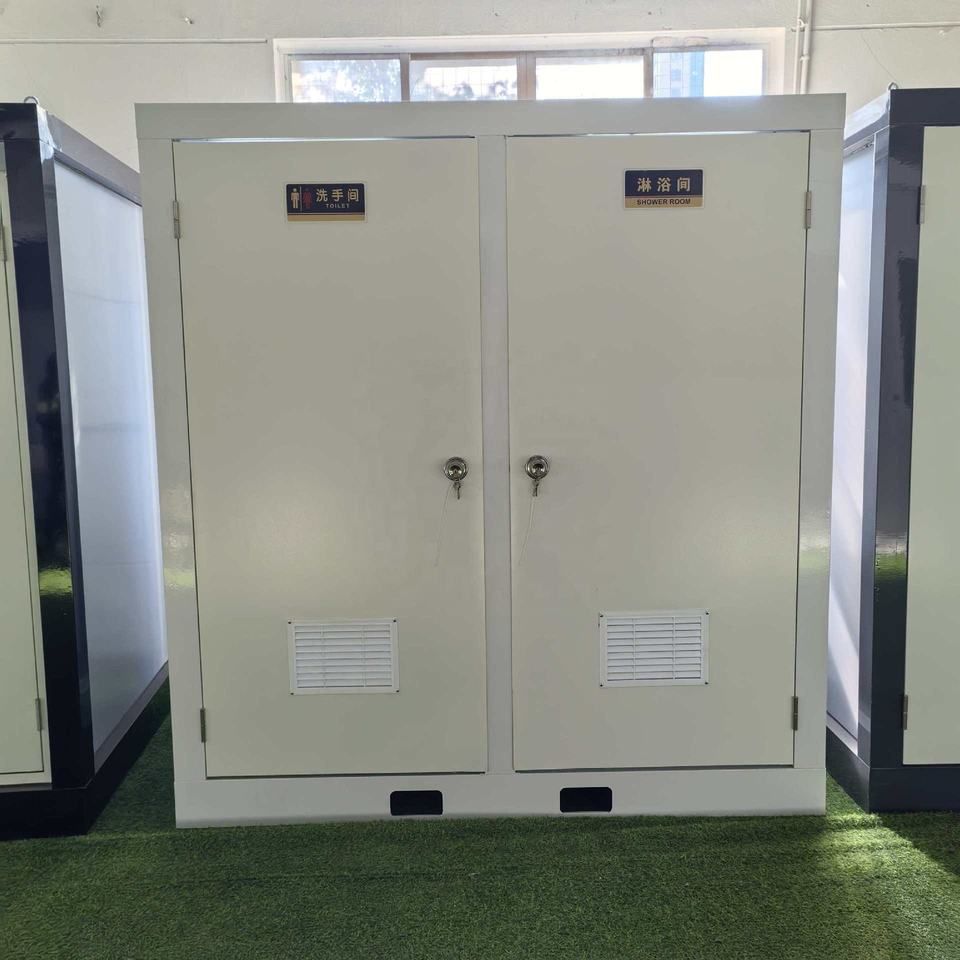
Aluminum Alloy Floor Mobile Toilet
The aluminum alloy floor mobile toilet can be customized, with the core being the design that combines the characteristics of aluminum alloy materials with the functional requirements of mobile toilets.
Adaptability of Aluminum Alloy Materials in Mobile Toilets
Aluminum alloy is lightweight, sturdy, and corrosion-resistant, making it an ideal material for mobile toilets placed outdoors for long periods. Its density is only one-third that of steel, significantly reducing the overall weight of the mobile toilet, facilitating transportation and installation. Meanwhile, the oxide film formed on the surface of aluminum alloy can effectively resist erosion from rainwater, humid environments, and chemicals, extending its service life. Additionally, aluminum alloy can be extruded into complex cross-sectional profiles, providing diverse design possibilities for floor structures, such as enhancing load-bearing capacity through hollow profiles or improving anti-slip performance through surface texture treatments.
Conventional Design Requirements for Mobile Toilet Floors
Mobile toilet floors need to meet three core requirements: anti-slip, waterproof, and easy to clean. In conventional designs, floors typically use anti-slip materials (such as PVC anti-slip rolls, rubber floors) combined with a waterproof layer to prevent sewage from penetrating the structural layer; some products support the floor with a steel frame to ensure load-bearing stability. If aluminum alloy floors are used, optimizations need to be made based on their characteristics:
- Anti-slip treatment: The surface of aluminum alloy can increase the friction coefficient through anodizing or sandblasting processes, or be covered with anti-slip patches or striped designs to prevent slipping due to water stains.
- Waterproof structure: The aluminum alloy floor needs to form a sealed connection with the main frame of the toilet, with water diversion channels or drainage holes set at the edges to prevent water accumulation and penetration; a waterproof membrane or coating can be added below the floor to form double protection.
- Load-bearing design: Determine the floor thickness and profile specifications according to the usage scenario (such as scenic spots, construction sites), for example, using aluminum alloy plates over 5mm thick or reinforced hollow profiles to ensure they can withstand a load of over 200kg/m².
Process for Customizing an Aluminum Alloy Floor Mobile Toilet
If you decide to use an aluminum alloy floor, you can refer to the following steps:
- Requirement communication: Provide key information such as the usage scenario (outdoor/indoor), frequency of use, and budget to the supplier, clearly stating that the floor material should be aluminum alloy and specifying anti-slip, waterproof, and other specific requirements.
- Design proposal: The supplier designs structural drawings based on the requirements, including the cross-section of the floor profile, connection method, drainage system, etc.; you can refer to customization cases in Nanjing, which adopt a combination of an aluminum alloy single door, marble-patterned wall panels, and an aluminum alloy floor.
- Sample confirmation: Produce floor samples or 3D models to verify the anti-slip effect, load-bearing capacity, and fit with the overall structure, and conduct simulated usage tests if necessary.
- Production and installation: After confirmation, proceed to the production stage, focusing on controlling the cutting precision of aluminum alloy, welding quality, and waterproof layer construction techniques; during installation, ensure that the connections between the floor, walls, and pipes are sealed and leak-free.
Through reasonable design, aluminum alloy floor mobile toilets can balance lightweight, durability, and functionality, making them suitable for scenic spots, construction sites, temporary events, and other scenarios.



