
Alashan Customized Mobile Toilet
The customized mobile toilet in Alashan can refer to the design and application characteristics of mobile toilets in Inner Mongolia, and be designed in a targeted manner based on the local environment and needs. The specific aspects are as follows:
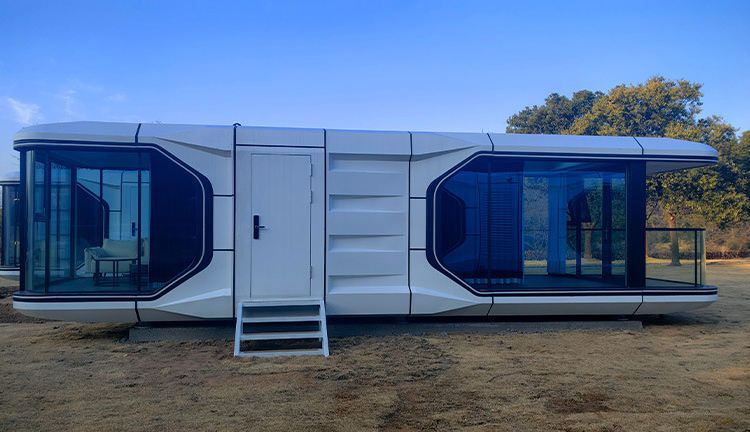
Functional positioning should meet regional needs Mobile toilets in Inner Mongolia are mainly designed to address issues such as high costs, significant ecological impacts, and insufficient flexibility, especially for addressing toilet challenges during relocation and covering key tourist areas and nomadic regions. As an ecologically fragile area, Alashan needs to enhance the "relocatability" of mobile toilets during customization, such as adopting modular design for easy and rapid disassembly, assembly, and transportation, reducing dependence on fixed infrastructure, and covering scattered scenarios such as desert scenic spots and pastoral areas.
Technical adaptability should cope with extreme environments Inner Mongolia experiences severe cold in winter and has a fragile ecosystem. The customized mobile toilets in Alashan should prioritize the use of microbial degradation technology or waterless packaging technology. The former decomposes waste through microorganisms, achieving harmless treatment without the need for water supply and drainage networks; the latter collects excreta in sealed bags, with zero sewage discharge, reducing interference with the original landscape. Both technologies are suitable for water-scarce and low-temperature environments and have low operation and maintenance costs, meeting the ecological protection requirements of Alashan.
Structural durability should resist wind and sand erosion Alashan experiences strong winds and sandstorms, along with significant temperature differences between day and night. The main body of the mobile toilet should adopt thickened galvanized steel structure combined with high-quality fiberglass panels to ensure corrosion and rust resistance. Structurally, it needs to strengthen wind resistance design, such as adding ground anchor fixing devices and optimizing wall connection nodes to cope with extreme weather conditions such as sandstorms. In addition, the sealing of doors and windows should be optimized to prevent sand intrusion and extend equipment lifespan.
Cultural integration design can enhance regional identity The appearance can draw inspiration from traditional elements such as yurts and oboos, for example, adopting a circular dome structure to simulate the shape of a yurt, decorating the walls with cloud or meander patterns, and using colors such as blue, white, and gold to echo grassland culture. The interior space can be decorated with ethnic-style elements, such as horse-head fiddle-shaped hooks and Mongolian script signs, to enhance the user's cultural experience.
Functional expansion can refer to similar cases For further customization, reference can be made to the technical routes of powerful manufacturers of mobile toilets in Inner Mongolia scenic spots (such as Dezhou Muda Machinery Equipment Co., Ltd.) or similar cases in Xinjiang, such as setting up gender-separated areas, management rooms, and barrier-free facilities to meet diverse needs. It is recommended to keep the floor area within 30 square meters to balance functionality and space efficiency.



