
Airport Vehicle-mounted Mobile Toilet
Airport vehicle-mounted mobile toilets mainly provide convenient toilet facilities for specific groups of people and enhance service efficiency and environmental performance through modular design and intelligent technology.
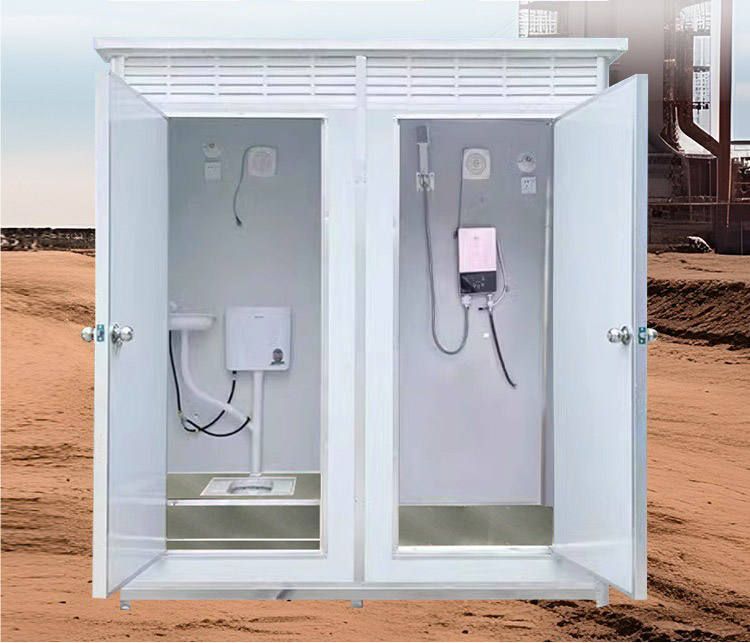
I. Serving Specific Groups and Solving Toilet Difficulties One of the core application scenarios of vehicle-mounted mobile toilets at airports is to provide toilet convenience for specific groups. For example, Beijing Capital International Airport has added mobile restrooms in the taxi queue lane, directly alleviating the toilet difficulties faced by taxi drivers during long queues. These facilities are usually deployed in areas with high pedestrian traffic but insufficient coverage of fixed toilets, such as taxi waiting areas and passenger gathering points, filling service gaps through a “mobile + fixed-point” model.
II. Modular Design for Flexible Deployment and Service Network Formation Mobile toilets around airports adopt a modular structure, allowing for rapid assembly and disassembly to meet different scenario requirements. For instance, during peak passenger periods or large-scale events, mobile toilets can be temporarily added in areas outside the terminal building or in parking lots, forming a complementary network with fixed toilets. This flexibility not only improves resource utilization but also enables dynamic layout adjustments based on passenger flow, effectively reducing queues at fixed toilets.
III. Intelligent and Barrier-free Design for Enhanced User Experience Modern mobile toilets integrate multiple intelligent technologies:
- Intelligent guidance system: Real-time display of toilet locations and usage status via electronic screens or apps to reduce user search time;
- Environmental monitoring devices: Continuous monitoring of temperature, humidity, air quality, and other indicators, with automatic adjustment of ventilation or deodorization equipment to ensure a comfortable internal environment;
- Barrier-free facilities: Equipped with ramps, handrails, and specialized sanitary ware to meet the needs of disabled individuals, the elderly, and other special groups. Some high-end models also support scanning codes to obtain emergency supplies such as toilet paper and disinfectant, further optimizing service details.
IV. Environmental Operation and Maintenance Technologies to Reduce Resource Consumption Mobile toilets achieve green operation through technological innovations:
- Solar power supply: Photovoltaic panels installed on the roof provide clean energy for lighting, ventilation, and other systems;
- Rainwater harvesting system: Collection of rainwater for toilet flushing or green irrigation to reduce freshwater usage;
- Biodegradation technology: Some models use microorganisms to decompose excreta, avoiding the high water consumption of traditional flush toilets. These technologies not only reduce operation and maintenance costs but also align with the environmental demonstration requirements of airports as transportation hubs.



