
Air-Conditioned Container House
An air-conditioned container house is a temporary or mobile house that uses a container as its carrier and is equipped with facilities such as air conditioners for living or specific purposes. The following is an introduction from aspects such as the situation related to the Nagoya Asian Games and the characteristics of air-conditioned container houses.
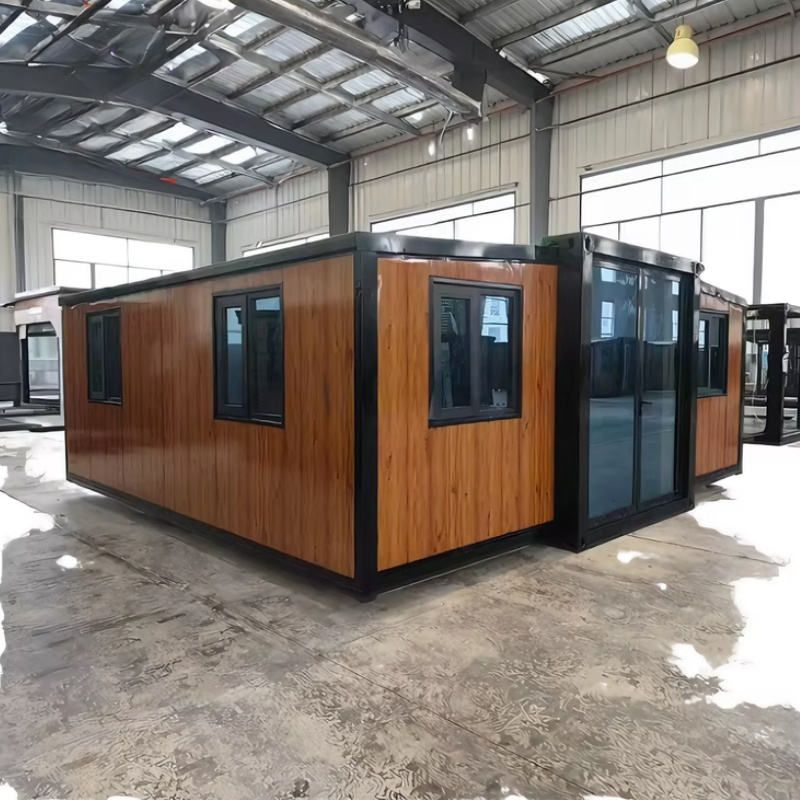
Air-Conditioned Container Houses at the Nagoya Asian Games
To cut costs, the 2026 Nagoya Asian Games did not build a traditional Asian Games Village. Instead, it used a combination of container houses, cruise ships, and scattered hotels to accommodate participants. About 2,000 people stayed in container houses renovated at the port area dock. Each unit consisted of two households, with each household planned as a two-bedroom and one-living-room space for three people to live in. The whole house had wooden decorations, with one toilet, one bathroom, and a dressing room. The small living room was equipped with a refrigerator, a sink, a washing machine, and an air conditioner. However, these houses had many problems. For example, the beds were short. The single beds were 1.95 meters long and 90 centimeters wide, so athletes over two meters tall could not stretch their legs. The space was narrow. There was only a walkway wide enough for one person to stand between the two beds. The height of the container house was also not high, making the overall space crowded and oppressive. The air-conditioning was insufficient. There was only one air conditioner in the whole house, and it was installed in the living room. It was uncertain whether the bedrooms could get cool air at night. The organizing committee even suggested that athletes open the door before going to bed to cool down the whole house and then close the door to sleep.
Characteristics of Air-Conditioned Container Houses
- Mobility and Flexibility: Based on containers, they have standardized sizes and structures, which are convenient for transportation and installation. They can be quickly moved and rearranged according to different needs, making them suitable for temporary projects or those that require frequent location changes.
- Functional Integration: They can integrate various living facilities. In addition to air conditioners, they can also be equipped with beds, tables and chairs, and bathrooms to meet basic living needs. They can also be configured with corresponding functions according to specific purposes, such as offices and medical facilities.
- Cost-Effectiveness: Compared with traditional buildings, container houses have lower material and construction costs and a short construction period, enabling them to be put into use quickly. They have significant advantages for projects with limited budgets or tight schedules.



