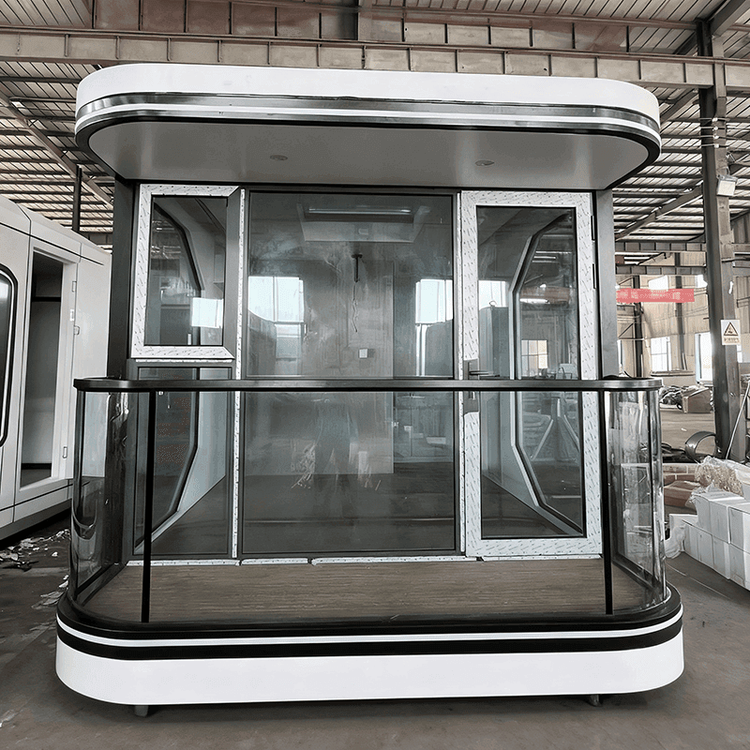
Agricultural Mobile Toilet
Agricultural mobile toilets are portable sanitation facilities specifically designed for rural areas, featuring flexible deployment and strong adaptability. Common types include color-steel plate structures and plastic structures, meeting the needs of different scenarios.

I. Color-Steel Plate Mobile Toilets
Color-steel plate mobile toilets are the mainstream choice in agricultural settings. Taking products from Henan Hemai Industrial Co., Ltd. as an example, they are made of color-steel plates or metal carved panels, offering corrosion resistance and anti-aging properties. They can withstand extreme temperatures ranging from -35℃ to 100℃, making them suitable for use in cold northern regions or hot southern areas. Structurally, they come in various sizes (e.g., 1.3×1.3×2.35 meters, 1.1×1.1×2.35 meters) and support customized processing to match the space requirements of different households or public places. In terms of functional design, some products are equipped with a 220V power supply system that can be connected to lighting or ventilation equipment, enhancing user comfort. Built-in fecal tanks facilitate fecal collection for subsequent harmless treatment. In terms of price, the cost per unit ranges from 475 yuan to 1,500 yuan, and bulk purchases (≥50 units) can reduce the price to 1,100 yuan per unit, offering significant cost-effectiveness.
II. Plastic Mobile Toilets
The new lightweight plastic mobile toilets for 2026 represent another technological direction, with core advantages of lightweight and modular design. The main body is made of high-strength plastic material, reducing weight by more than 40% compared to color-steel plate structures, facilitating manual handling or mechanical lifting, especially suitable for complex terrains or scenarios requiring frequent relocation. In terms of functional configuration, they integrate a large-capacity clean water tank and a gravity flushing system, enabling water-saving flushing through foot pump operation. The exhaust pipe design effectively expels odors, and in combination with ventilation openings, it forms air convection to improve internal air quality. Additionally, the provision of signboards enhances the clarity of usage instructions, catering to rural users with lower literacy levels.
III. Purchase Recommendations
- Scenario Matching: For long-term fixed use, prioritize color-steel plate toilets; for short-term flexible deployment, choose plastic toilets.
- Climate Adaptability: In northern regions, confirm the product's low-temperature tolerance; in southern regions, focus on ventilation and moisture-proof design.
- Cost Control: Bulk purchases can significantly reduce the unit price, but assess actual needs to avoid resource waste.
- After-Sales Support: Prioritize suppliers offering drop-shipping and 7-day delivery services to ensure construction progress.
The promotion of agricultural mobile toilets should be combined with rural toilet renovation policies, driving the popularization of sanitation facilities through technological adaptation and cost control, and contributing to rural revitalization.