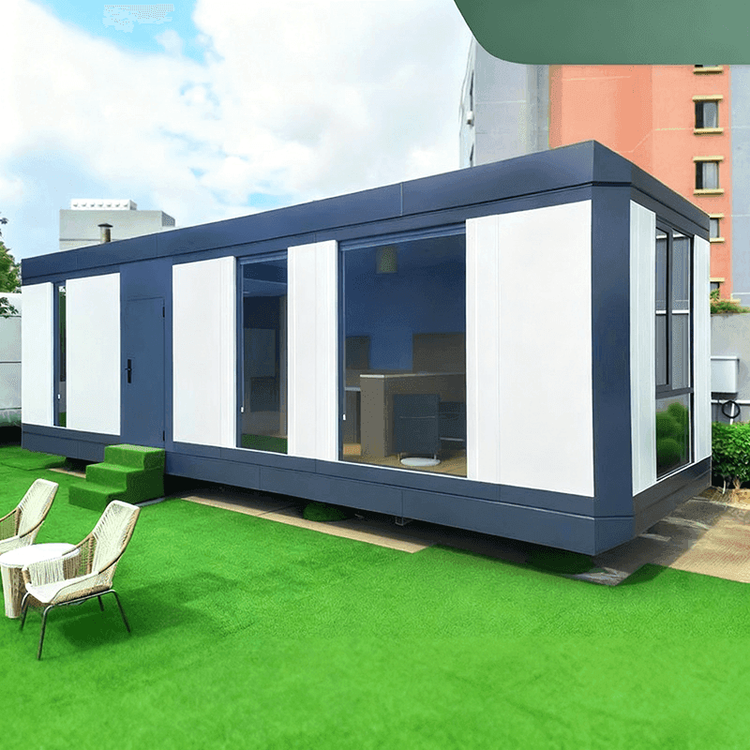
Advantages of Standard Mobile Toilets
Standard mobile toilets offer a range of significant advantages, as detailed below:

1. High Mobility Standard mobile toilets are designed to be mobile, enabling them to flexibly adapt to changes in venue. In scenarios such as urban construction, large-scale events, or temporary projects, when venue functions are adjusted or usage requirements change, mobile toilets can be quickly relocated to new positions. This avoids the substantial waste of resources associated with demolishing fixed toilets, including building materials, labor costs, and time costs, thereby improving resource utilization efficiency.
2. Diverse Treatment Methods Appropriate treatment technologies can be employed based on different usage environment constraints. For example, in areas with a well-established sewage pipe network system, flushing treatment can be used to directly discharge fecal sewage into the network. In remote areas or places lacking infrastructure, treatment methods such as packaging or biodegradation can be utilized to ensure effective disposal of excreta and meet hygiene requirements in various environments.
3. Small Footprint Compared to traditional fixed toilets, standard mobile toilets occupy a smaller area, significantly reducing land resource usage. In the context of increasingly scarce urban land resources, this advantage is particularly prominent. It not only saves land space and reduces land use costs but also meets the toilet needs of more people within limited space.
4. Compact Structure and Easy Assembly/Disassembly Constructed using lightweight steel and other materials, standard mobile toilets have a compact structure that facilitates easy disassembly and movement. When relocation or position adjustment is required, assembly and disassembly can be completed quickly, reducing construction time and labor input. Moreover, the assembly and disassembly process is relatively simple, not requiring complex techniques or equipment, thereby lowering operational difficulty and costs.
5. Good Sound Insulation and Environmentally Friendly Utilizing a flushing sewage system, standard mobile toilets not only comply with environmental protection requirements by reducing environmental pollution but also offer good sound insulation. This provides users with a relatively quiet toilet environment, enhancing the overall user experience.
6. High-Quality Materials and Excellent User Experience High-quality materials are selected, such as stone-plastic board for interior walls, which are durable and easy to clean. Additionally, comprehensive配套 (which can be translated as '配套 facilities' or simply 'facilities' in this context, but for clarity in English, we'll expand it) including sound insulation cotton and refined decoration are provided, enhancing the user experience from multiple aspects and making mobile toilets more comfortable and hygienic.
7. Aesthetically Pleasing and Cost-Effective Standard mobile toilets feature a stylish and attractive appearance, in contrast to the monotony of traditional toilets. Furthermore, compared to the construction of traditional toilets, mobile toilets incur lower costs, offering higher cost-effectiveness and enabling the satisfaction of public hygiene needs at a lower expense.