Advantages of Public Mobile Toilets
The advantages of public mobile toilets are mainly reflected in flexible deployment, efficient space utilization, environmental protection and energy conservation, strong scene adaptability, user-friendly maintenance convenience, and recyclable materials.

1. Flexibility and Rapid Deployment
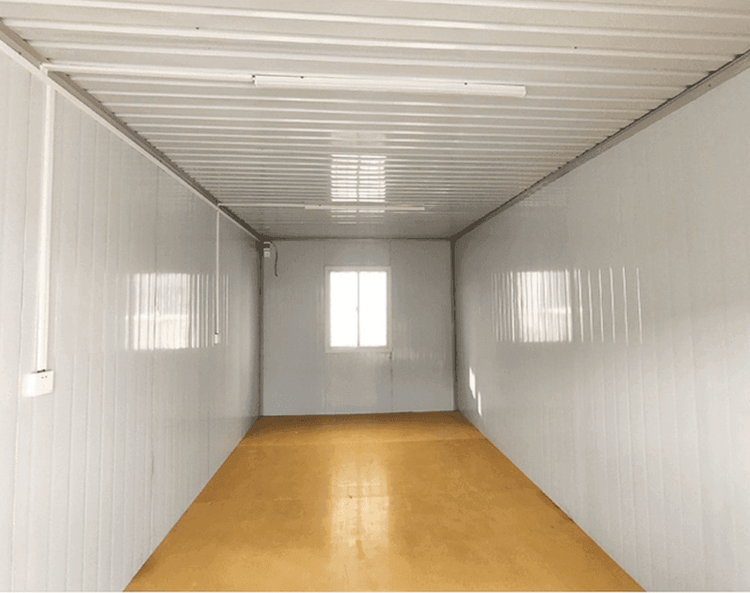
Public mobile toilets adopt a modular design, eliminating the need for complex civil engineering. They can be transported by vehicles to the target location and be hoisted, connected to water and electricity, and put into use within a few hours. This characteristic makes them an ideal choice for temporary and emergency venues, such as large-scale events, sports competitions, exhibitions, and other scenarios that require a rapid increase in toilet facilities. After the event, the toilets can be quickly removed to restore the original appearance of the site and avoid long-term occupation of land resources.
2. High Space Utilization
Mobile toilets do not rely on permanent construction land and can be flexibly placed in corners, along roadsides, or beside green belts, making them particularly suitable for areas with tight land resources, such as urban cores and scenic spots. Their compact design enables intensive land utilization, and through modular combinations, the number of toilet stalls can be expanded to meet the needs of different-sized crowds.
3. Environmental Protection and Energy Conservation
Mobile toilets reduce environmental loads through multiple technologies:
- Water-saving technology: Vacuum toilets (single flush of 1-2 liters), waterless flushing toilets (such as microbial degradation, foam sealing), or micro-flushing toilets are used to significantly reduce water consumption.
- Wastewater recycling: Some high-end products integrate wastewater treatment units to achieve internal water reuse.
- Pollution control: Equipped with septic tanks or microbial degradation systems, they reduce secondary pollution during fecal transportation and reduce dependence on urban sewage networks.
- Energy self-sufficiency: Some models use solar power, automatic ventilation, and intelligent deodorization functions to reduce the need for external energy access.
4. Wide Range of Applicable Scenarios
Mobile toilets can cover various scenarios:
- Municipal engineering: Supplementing the shortage of public toilets in old urban areas and bustling streets.
- Tourist attractions: Adding facilities during peak seasons or at temporary attractions to alleviate toilet pressure for tourists.
- Construction sites: Providing sanitary facilities for workers, meeting safety production requirements.
- Emergency disaster relief: Quickly setting up after disasters to prevent disease transmission.
- Public toilet network optimization: Serving as a supplement to fixed public toilets to enhance service radius and coverage density.
5. User-friendly Design and Maintenance Efficiency
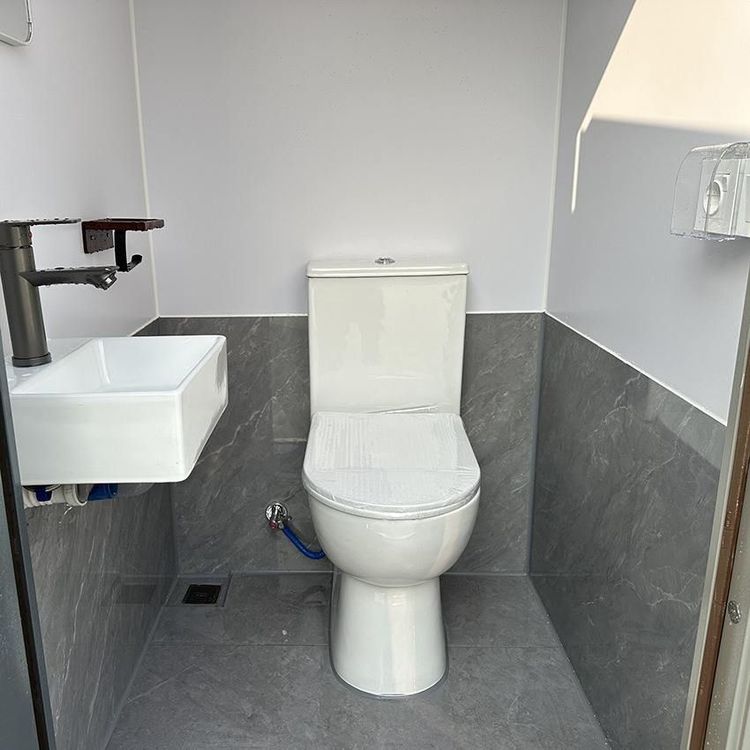
Durable materials such as stone-plastic board interior walls and non-slip floors are used internally, along with soundproof cotton and fine decoration to enhance the user experience. Some products are equipped with barrier-free facilities, but comfort still needs to be optimized due to the limitations of the box size. The modular design facilitates rapid disassembly, assembly, and cleaning and maintenance, but regular cleaning of septic tanks and replenishment of disinfectants are required.
6. Material Recyclability
The main structure mostly uses lightweight, sturdy, and recyclable environmentally friendly materials (such as aluminum alloy and high-density polyethylene), adhering to the principles of a circular economy and reducing construction waste generation.