
Advantages and Disadvantages of Mobile Toilets
The advantages and disadvantages of mobile toilets can be summarized as follows:
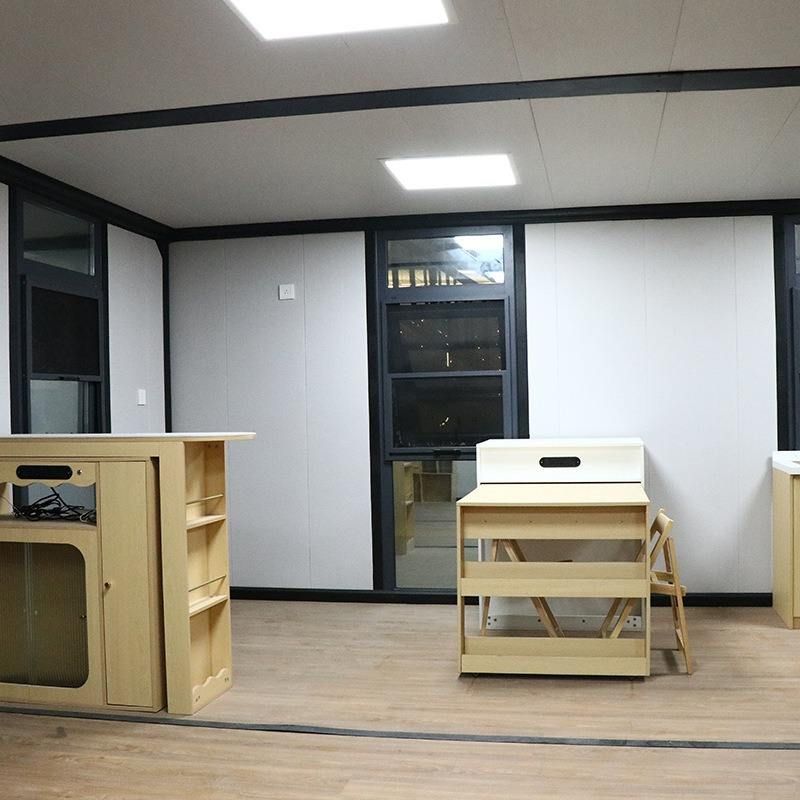
Advantages:
Convenience and Mobility The core advantage of mobile toilets lies in their rapid deployment capability. Without the need for complex infrastructure construction (such as drilling holes and laying pipelines), they can be put into use immediately after installation. They are particularly suitable for temporary events (such as music festivals and sports events) or scenarios where the venue changes frequently (such as construction sites and commercial streets). Their mobility also reduces resource waste caused by the demolition of fixed facilities. For example, scenic spots can dynamically adjust the positions of toilets according to tourist traffic to improve resource utilization efficiency.
Environmental Protection and Resource Conservation Most mobile toilets adopt waterless packing, microbial degradation, or foam sealing technologies, significantly reducing wastewater discharge and land occupation. For instance, the microbial degradation technology generates organic fertilizers by decomposing excreta, achieving resource recycling. Some models are equipped with solar power supply systems, further reducing dependence on traditional energy sources.
Multi-functionality and Adaptability The treatment methods are flexible and diverse. Depending on environmental conditions, water flushing, waterless packing, or foam sealing modes can be selected. They are usually equipped with odor control devices and ultraviolet sterilization lamps inside to ensure that hygiene standards are met. For example, insulated toilets can be selected in high-altitude areas, while waterless technologies are preferred in water-scarce regions.
Cost-effectiveness Compared with traditional toilets, mobile toilets have a short construction period and require less investment in manpower and materials, making them especially suitable for temporary or low-traffic areas. Their reusable nature also reduces long-term operating costs. For example, a single mobile toilet can serve multiple projects through multiple relocations, amortizing the initial investment.
Aesthetics and Intelligence Modern mobile toilets have a simple design, and their appearance can be customized to blend into the public environment and even become part of the landscape. Some high-end models are equipped with intelligent control systems that support remote monitoring of toilet stall usage and automatic alarming for maintenance needs, improving management efficiency.
Disadvantages:
Durability and Maintenance Costs The main materials are mostly stainless steel or EPS panels, which are prone to corrosion when exposed to the outdoors for a long time and require regular painting and welding maintenance. Waterless technologies (such as packing types) may increase cleaning difficulty due to excreta residue, and if not maintained in a timely manner, they are prone to generating odors.
Environmental Adaptability Limitations In low-temperature environments, the insulation performance may be insufficient, which may cause internal pipelines to freeze; high temperatures may cause material deformation (such as the softening of plastic parts). In extreme environments (such as severely water-scarce and geologically unstable areas), their stability may be lower than that of traditional toilets.
Limitations of Treatment Technologies Some technologies rely on external energy sources (such as the microbial degradation system driven by electricity). In remote areas, additional power generation equipment needs to be configured. If the process control of traditional waterless toilets is not strict, there may be a risk of leakage, polluting the surrounding soil or water sources.



