
Advantages and Disadvantages of Container Houses
The advantages of container houses include structural stability, efficient installation, flexibility and portability, cost control, environmental friendliness, and good sealing performance; the disadvantages are reflected in the impact of long-term use on the environment, structural wear and tear from multiple disassemblies and assemblies, and safety hazards in non-standard products.
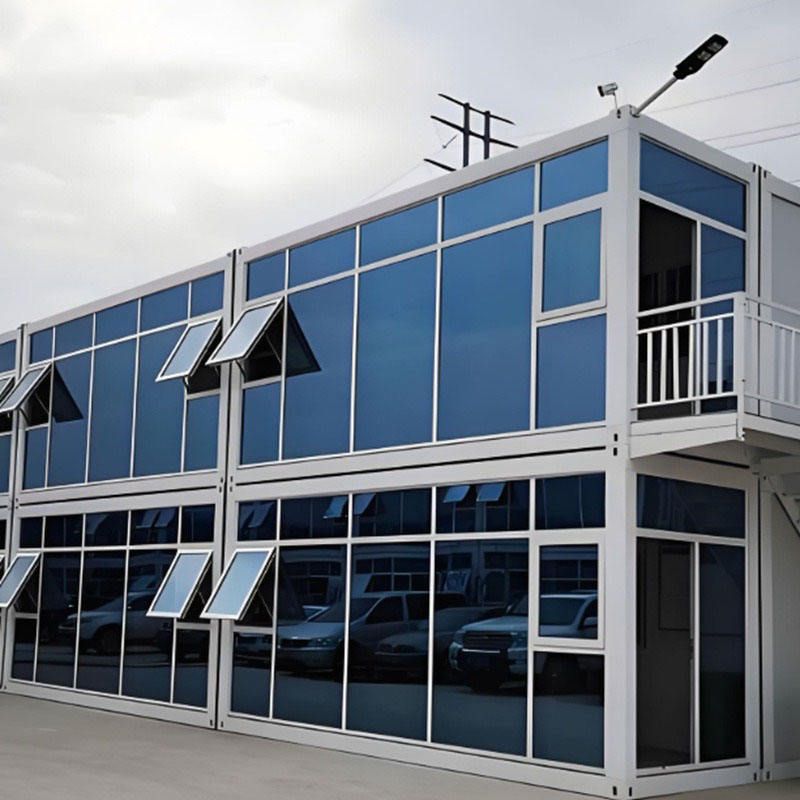
Advantages:
Strong structural stability: High-quality container houses adopt a full steel structure frame, with a wind resistance rating of up to Level 12 and an earthquake resistance rating of Level 8. Under extreme working conditions, the frame deformation rate is far below the industry threshold, effectively resisting natural disasters such as typhoons and earthquakes, and ensuring safety in use.
High installation efficiency: Modular design supports rapid assembly. The shortest installation time for a single set is only 2 hours, and no complex welding procedures are required. It can be completed through bolt splicing, greatly shortening the preparation time in the early stages of the project, especially suitable for projects with tight schedules.
Flexibility and portability: Container houses can be spliced and combined according to needs, easily expanded into different functional spaces, such as dormitories, offices, or meeting places; folded container houses have a volume of only 1/5 of their expanded state when folded, and a single truck can carry 20 sets, significantly reducing transportation costs.
Cost control: Compared with traditional buildings, container houses save at least 40% of construction time and can be repeatedly disassembled and assembled more than 15 times. The cost per use is only 1/3 of that of a new product, resulting in lower long-term use costs.
Environmental friendliness: The renovation process of container houses generates less construction waste, and the materials can be recycled, in line with the concept of low-carbon environmental protection.
Good sealing performance: After professional treatment, container houses have excellent sealing performance, with no water leakage problems, suitable for use in various climatic conditions.
Disadvantages:
Long-term use affected by the environment: The service life of container houses is greatly affected by quality and the use environment. Humid environments can shorten their lifespan, while regular maintenance and upkeep can extend their service years.
Structural wear and tear from multiple disassemblies and assemblies: After multiple disassemblies and assemblies of container houses, the connecting bolts are prone to fatigue wear. When the number of disassemblies and assemblies exceeds 5 times, the risk of structural deformation increases by about 15%.
Safety hazards in non-standard products: Some non-standard white-label products on the market use thin steel materials for the frame, with a wind resistance rating of only Level 6-7, far below the national standard requirements. Under extreme working conditions, problems such as frame deformation and wall cracking are prone to occur, posing safety hazards.



