
Advantages and Disadvantages of Container Homestay Houses
The advantages of container homestay houses are significant, but there are also some potential disadvantages that need to be considered comprehensively.
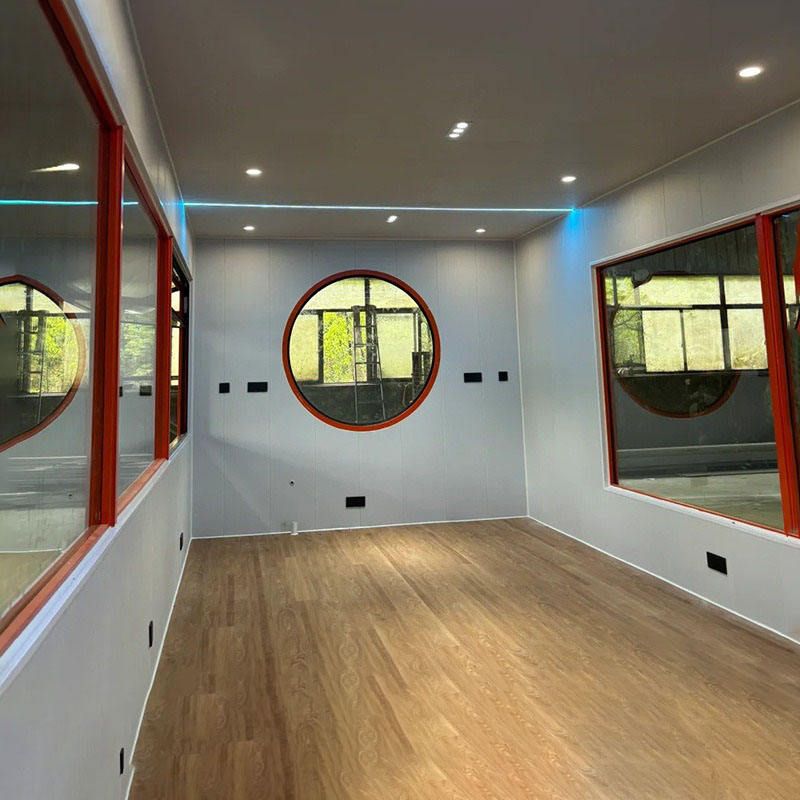
Advantages
Rapid and Flexible Construction
The core advantage of container homestays lies in their modular nature. The container bodies undergo main structure construction, wall treatment, and pipeline pre-embedding in factories. On-site, only lifting, assembly, and pipeline connection are required, typically allowing the homestay to be put into use within 2-4 weeks. This “prefabricated” construction method significantly shortens the project duration, and the container bodies can be disassembled and rebuilt elsewhere, making them particularly suitable for temporary projects or scenarios requiring frequent relocation, such as seasonal homestays in tourist attractions and event exhibition halls.High Cost-Effectiveness
Compared to traditional buildings, container homestays have lower material costs. Shipping containers, as standardized industrial products, have transparent bulk purchase prices. The simplified construction process reduces labor requirements, further compressing the total cost. For investors with limited budgets or those seeking a quick return on investment, their cost-performance advantage is evident.Environmentally Friendly and Sustainable
The renovation of container homestays directly utilizes discarded or retired shipping containers, reducing the consumption of steel and other raw materials while avoiding the generation of construction waste. If green technologies such as solar panels and rainwater harvesting systems are adopted, resource utilization can be further enhanced, aligning with the development trend of low-carbon buildings.Unique Styling
Modular combination offers high design freedom. Through techniques such as stacking, offsetting, and rotation, containers can form geometrically striking exteriors. Paired with materials like glass curtain walls and wooden decorations, they can create both industrial and modern minimalist styles, becoming popular “Instagrammable spots” for tourists.Strong Adaptability in Thermal Insulation
After professional design, container homestays can incorporate thermal insulation layers such as rock wool and polyurethane, combined with double-glazed windows, fresh air systems, and air conditioning equipment, to adapt to most climatic regions. For example, enhancing wall insulation in cold regions and optimizing ventilation design in hot regions can ensure indoor comfort.
Disadvantages
Spatial Limitations
Standard containers have fixed dimensions (e.g., 20 feet long, 6 meters wide, and 2.4 meters high), resulting in relatively narrow and long interior spaces that require thoughtful layout to avoid a cramped feeling. If expanding the area is necessary, multiple containers must be assembled, potentially increasing structural complexity and costs.Moisture and Corrosion Challenges
The main body of containers is made of steel. If moisture-proofing is not handled properly, prolonged exposure to humid environments (e.g., coastal areas) can lead to internal condensation and metal corrosion, affecting structural lifespan. Waterproof coatings, moisture barriers, and regular maintenance are required to mitigate risks.Approval and Regulatory Restrictions
Some regions have strict regulations regarding the use, fire safety, and seismic resistance of container buildings. It is essential to consult local authorities in advance to avoid project delays due to compliance issues.



