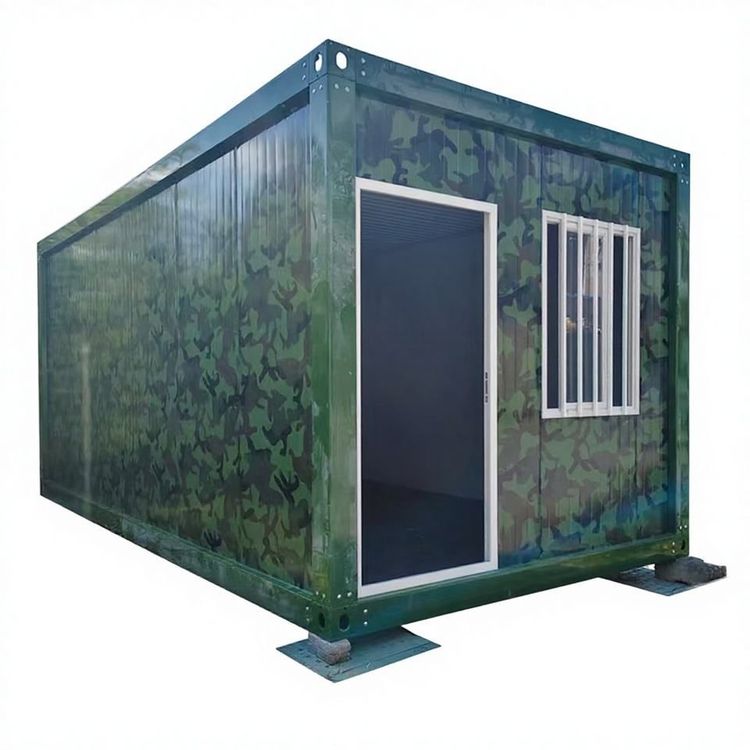
60-Year-Old Prefabricated Panel House
The 60-year-old prefabricated panel house has exceeded its conventional design life and service life. Whether it can be inhabited requires a comprehensive assessment of multiple factors and cannot be directly determined.

From the perspective of structural safety, most prefabricated houses over 40 years old are on the verge of reaching the end of their service life. The old structures may gradually lose their earthquake and wind resistance capabilities, posing a threat to the lives of residents. Compared to modern high-end residential areas or high-rise buildings, which generally have an earthquake resistance of magnitude 8, prefabricated panel houses have poorer earthquake resistance. In the event of natural disasters such as earthquakes, the structural integrity of these houses is easily compromised, and they may even collapse entirely, as was the case with almost all prefabricated panel houses in the Wenchuan earthquake-stricken areas.
Building quality, maintenance, and environmental factors also affect the lifespan of these houses. If the production process of the prefabricated panels strictly adheres to standards, the material quality is up to par, and the house is well-maintained, its service life may be relatively extended. However, for a 60-year-old house, even if the initial quality was good and maintenance was adequate, it is difficult to guarantee complete structural safety.
Wall cracking, water seepage, and leakage are also common problems. The inherent gaps in the prefabricated panels and cracks caused by foundation settlement can lead to leakage if not repaired promptly, resulting in damage to neighbors downstairs and the need to bear compensation and repair responsibilities. Moreover, since prefabricated panel houses are mainly constructed by cement splicing, this splicing method makes them more susceptible to external forces, leading to cracks and water leakage issues. Additionally, their sound insulation and thermal insulation effects are poor, resulting in high indoor temperatures in summer and poor sound insulation of the floor, with external noise affecting work and daily life.
There is no unified mandatory demolition age limit for the demolition of prefabricated panel houses in official policies. Instead, the principle of "renovate where possible, demolish when necessary" and "adapt to local conditions and implement differentiated strategies" is adhered to. Since 2022, China has been implementing a policy of urban renewal, focusing on the renovation and improvement of prefabricated panel houses, and only demolishing buildings that meet the criteria for dangerous houses. If the house structure is stable, poses no safety hazards, and is well-maintained, it may still be inhabitable. If there are serious safety hazards, renovation and reinforcement or demolition and reconstruction should be considered. Before making a decision, it is advisable to consult professional construction institutions or relevant departments for a safety assessment.