55 Mobile Toilet
A mobile toilet is a facility that can be moved as a whole and provides toilet services to the public, suitable for various locations and featuring multiple classifications and characteristics.

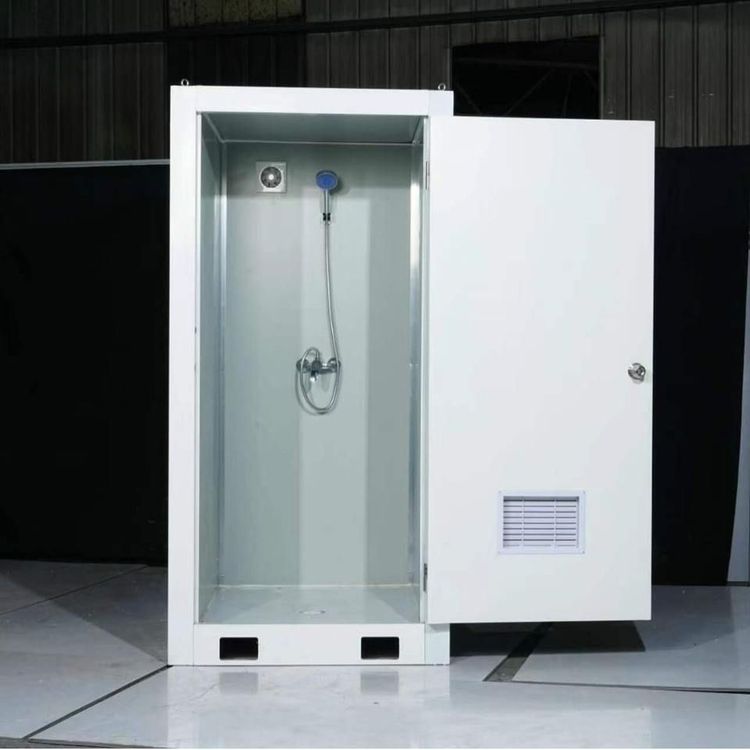
Generally, a mobile toilet refers to a facility that can be moved in its entirety and placed at locations with fixed or temporary needs to provide toilet services to the public and clients. It has a wide range of applicability, suitable for stations, docks, tourist attractions, villa areas, newly built residential communities, large construction sites, squares, densely populated public places, and bustling commercial streets.
In terms of structural composition, it generally consists of a fecal sewage storage tank (or fecal sewage treatment device), floor slab, sanitary ware, walls, washing equipment, water tank, roof, and mobile device.
There are multiple classification methods. According to structural form, it can be divided into single-structure mobile toilets and composite-structure mobile toilets. The single-structure type is relatively independent and simple, while the composite-structure type is more complex and may have richer functions. According to the method of movement, it can be divided into hoisting and handling mobile toilets, powered and towed mobile toilets, with different movement methods suitable for different transportation scenarios and needs. According to sewage treatment methods, it can be divided into water-flush and waterless-flush suction mobile toilets, circulating water-flush mobile toilets, and dry-packing mobile toilets. The water-flush type has higher cleanliness but requires a water source, while the waterless-flush suction and dry-packing types are more suitable for water-scarce environments, and the circulating water-flush type can achieve water resource recycling.
The characteristics of mobile toilets are quite prominent. They can be conveniently transported to any location where a toilet needs to be set up, whether it is a temporary event site or a remote construction site, and can quickly provide toilet services. Moreover, they can be used repeatedly and have advantages such as mobility, combinability, and ease of transportation, allowing for flexible adjustment of position and quantity according to actual needs. When selecting mobile toilets for scenarios such as construction sites in Xinyu, choices can be made based on standards such as capacity suitability, material and structure, and functional configuration. For rental services, attention should be paid to core points such as the composition of rental prices, service response speed, and compliance requirements, while also ensuring proper installation and management.