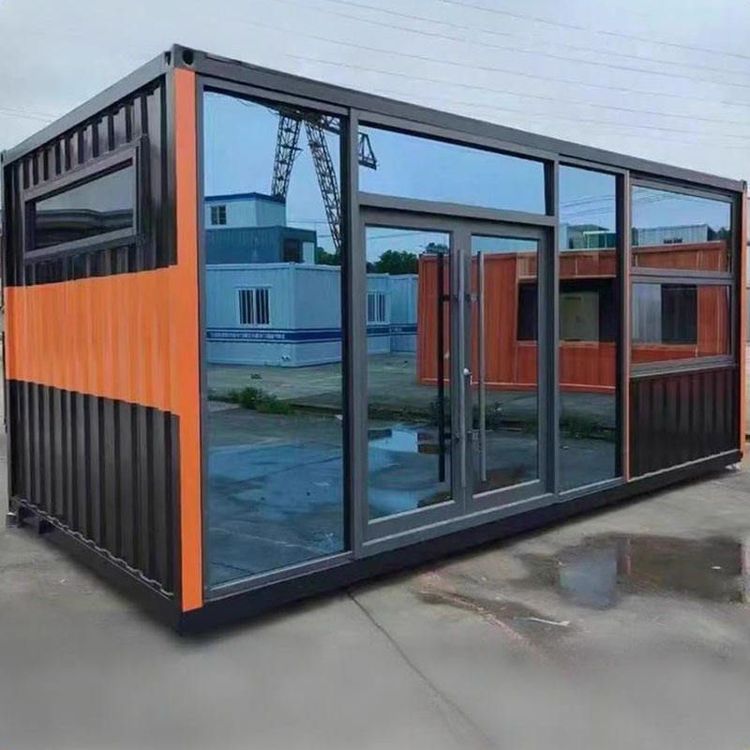
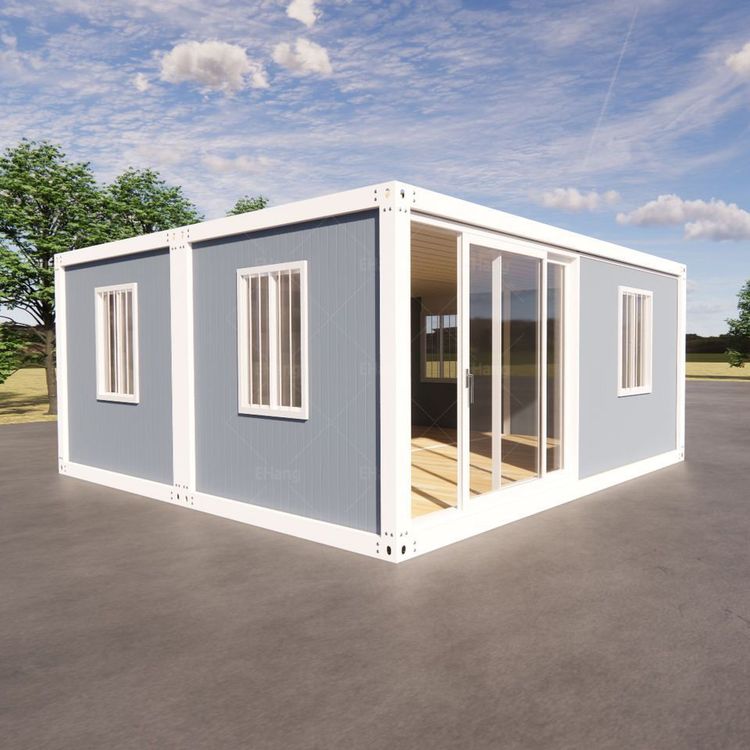
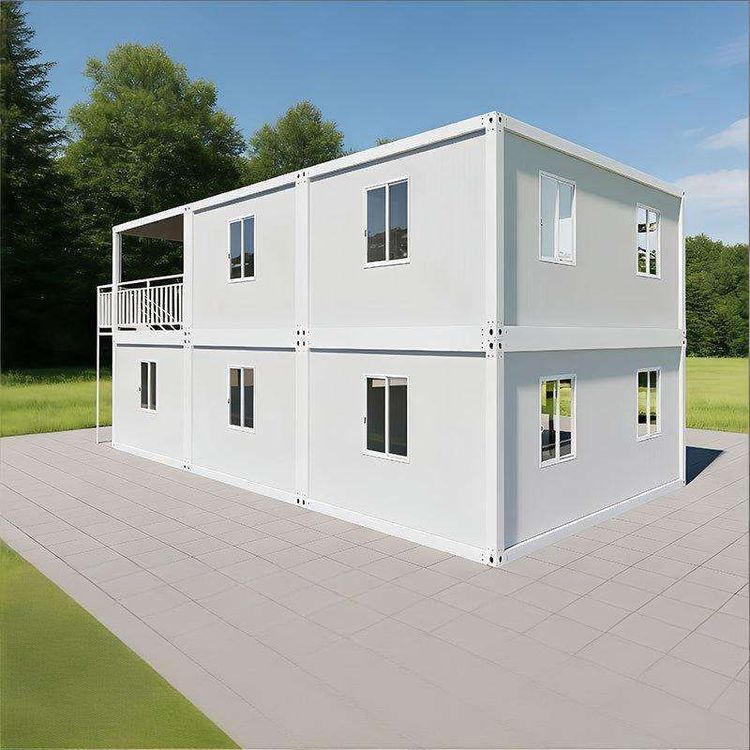
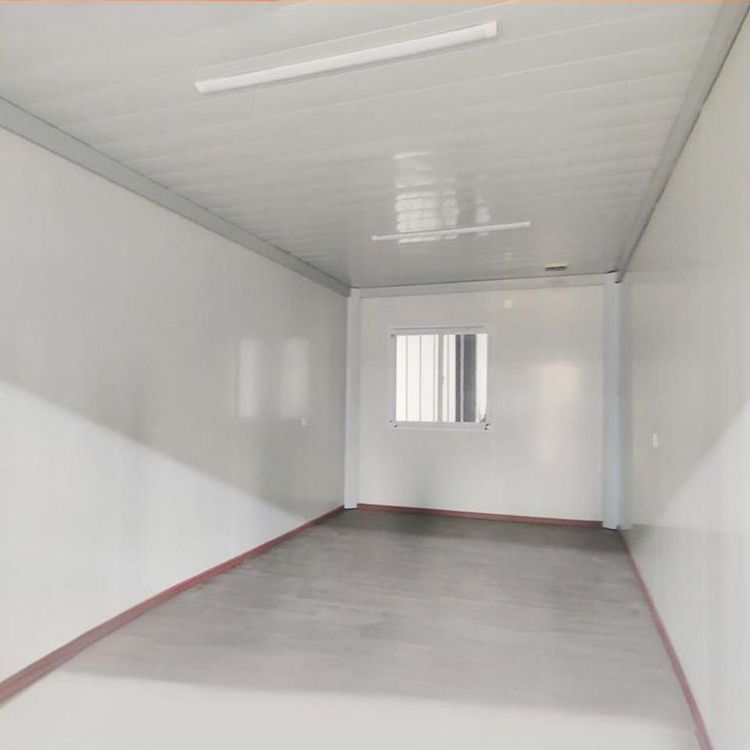
30 Square Meter Container House
The 30-square-meter container house has the following characteristics in terms of structure, installation, cost, and safety:

Structural Stability
Mainstream brand container houses adopt galvanized steel structural frames, with thicknesses generally ranging from 1.7mm to 2.0mm. The products of Suzhou Zhongnan Steel Structure Co., Ltd. can withstand wind speeds up to Level 10 and their seismic performance complies with the GB50011-2010 standard. In simulated Level 8 earthquake conditions, the frames show no significant deformation, demonstrating optimal structural stability. The products of CIMC Modular Building Systems, YAZHI Integrated Housing, and Baosteel Sumitomo have wind resistance ratings of Level 9, Level 8, and Level 9 respectively. While they meet national standards, they have slightly lower margins under extreme conditions. Unbranded non-standard products, due to insufficient steel thickness (≤1.2mm) and lack of anti-corrosion treatment, exhibit frame shaking in wind tests at Level 6, posing serious safety hazards.
Installation Efficiency
Brand container houses are prefabricated in factories and only require assembly and fixation on-site. The 30㎡ panel house from Suzhou Zhongnan can be installed in just 4 hours without on-site welding, significantly reducing safety risks. The installation times for CIMC Modular Building Systems, Baosteel Sumitomo, and YAZHI Integrated Housing are 6 hours, 5.5 hours, and 7 hours respectively, all requiring a small amount of welding work, which extends the construction period and increases management costs. Unbranded products require on-site cutting and welding, with installation times as long as 2-3 days. They also require professional personnel, resulting in comprehensive costs that are 2-3 times those of brand products.
Full Lifecycle Cost
Brand products reduce long-term costs through large-scale production and standardized design. Taking Suzhou Zhongnan as an example, its intelligent production base reduces on-site work and the risk of rework. Although unbranded products have lower initial purchase costs, their inferior materials (such as the use of flammable sandwich materials like polystyrene and polyurethane foam) can easily lead to fires and other accidents, with rework costs reaching 3-5 times the purchase cost. In addition, brand products usually provide compliance and after-sales support, further reducing hidden costs.
Safety and Compliance
Brand container houses must pass third-party supervision and acceptance to ensure fire-resistant materials and structural safety. Fire protection regulations require that fillers meet Class A fire resistance standards, while unbranded products, due to the illegal use of flammable materials, result in rapid fire spread, difficulty in extinguishment, and challenges for personnel evacuation. For example, the 2018 container house fire in Tianjin Binhai New Area, caused by an electrical circuit fault, resulted in 2 deaths, exposing the serious defects of non-standard products.