
25-Year Lifespan Mobile Toilet
There are indeed models of mobile toilets that can achieve a 25-year service life, with their longevity influenced by a combination of materials, craftsmanship, and usage environment. The following analysis delves into the technical principles, typical cases, and key factors for extending their lifespan:
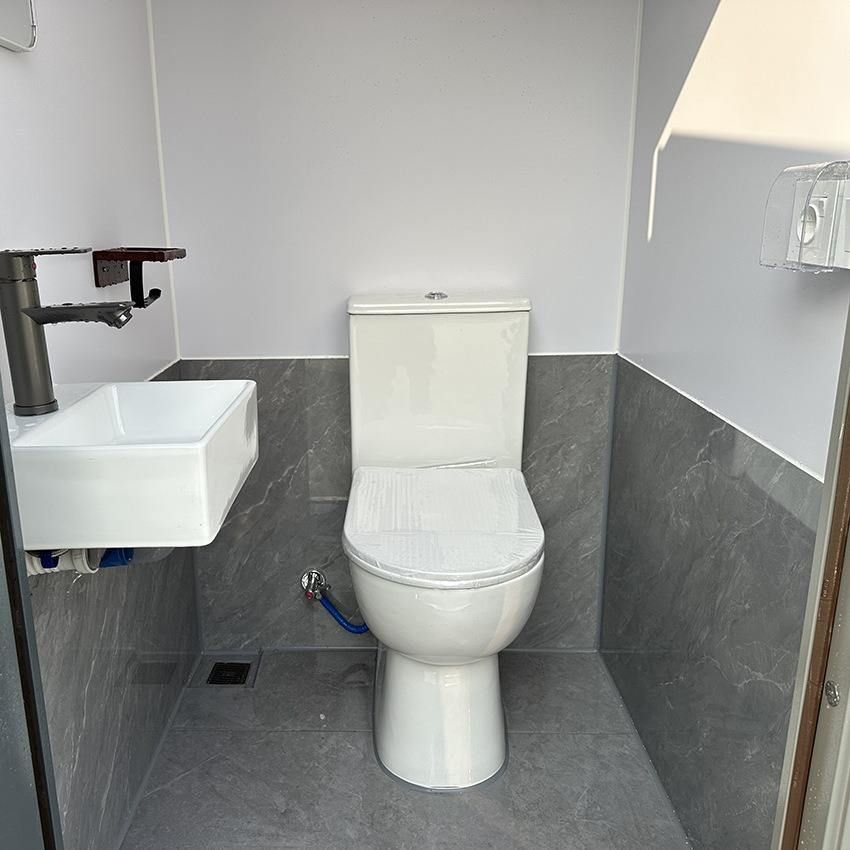
1. Material Selection as the Foundation for Longevity
High-density polyethylene (HDPE) and high-quality steel are the core materials for mobile toilets to achieve a long service life. HDPE is resistant to acids, alkalis, ultraviolet rays, and aging, making it less prone to embrittlement under long-term outdoor exposure. For instance, some toilet bodies molded from HDPE as a single piece can withstand extreme temperatures ranging from -40℃ to 60℃, reducing structural damage caused by material degradation. High-quality steel (such as galvanized steel or stainless steel) enhances weather resistance through surface anti-corrosion treatments (such as hot-dip galvanizing or spraying), maintaining structural stability in humid or salt-spray environments. Mobile toilets with metal carved panel exteriors are typical examples, where the outer metal panel and internal insulation layer are compounded through a special process, meeting strength requirements while reducing wind resistance through carved designs, thereby lowering stress fatigue during long-term use.
2. Craftsmanship Standards Determine Structural Durability
The precision of welding processes directly affects the toilet's resistance to deformation. Models using fully automatic welding equipment have uniform welds without pores, effectively preventing internal corrosion caused by rainwater penetration. For example, a metal carved panel toilet produced by a sanitation equipment company utilizes laser cutting and robotic welding technologies to ensure that the seams of the outer shell achieve an IP65 rating (dustproof and waterproof), remaining rust-free after 10 years of use in coastal areas with high humidity. Additionally, standardized construction procedures (such as foundation flatness error ≤3mm and torque control for connectors) reduce abnormal noises and looseness during use, extending the overall lifespan.
3. Practical Cases Verify the Feasibility of a 25-Year Lifespan
An HDPE+steel hybrid structure mobile toilet used in a municipal project has been in operation since 2005, requiring only the replacement of consumables such as sealing strips and locks every five years, with no cracks or deformations in the main structure. This model adopts a modular design, dividing the toilet into three parts: base, walls, and roof, connected by bolts instead of welding, facilitating local repairs while avoiding stress concentration. In another case, a 304 stainless steel mobile toilet used in a scenic area increased the thickness of its internal support frame (from 2mm to 3mm), meeting safety load requirements after 25 years of daily use by 200 people.
4. Key Maintenance Measures for Extending Lifespan
Even with durable materials, regular maintenance is essential for achieving a 25-year service life. It is recommended to check the tightness of connectors every six months, clean drainage pipes annually to prevent blockages, and apply anti-rust treatments (such as painting with anti-rust paint) to metal surfaces every three years. In salt-spray or chemical pollution areas, the maintenance cycle should be shortened to once every quarter, with a focus on inspecting welding points and riveted joints for corrosion.



