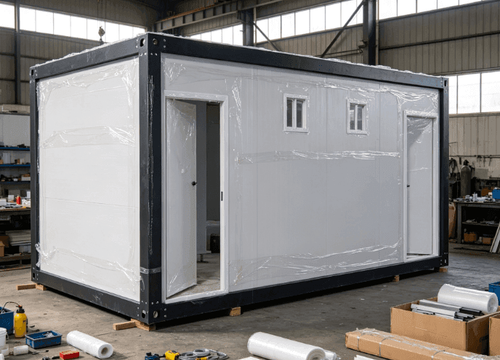
1.5-Meter Length and Width Mobile Toilet Translation
A mobile toilet measuring 1.5 meters in length and 1.5 meters in width is not a common specification in the market, with existing products mostly having widths concentrated in the range of 0.8-1.2 meters. The following analysis is conducted from three aspects: specification distribution, design logic, and customization possibilities:

I. Existing Specification Distribution: Widths Mainly in the 0.8-1.2 Meter Range
According to market research data, mobile toilets with a length of 1.5 meters are widely used in scenarios such as concert rentals and tourist attractions, but there are significant differences in width design:
- Xinyang Concert Mobile Toilet: The single toilet cubicle has dimensions of 1.5 meters in length, 0.8 meters in width, and 2.2 meters in height, featuring a corrosion-resistant metal modular design with a width of only 0.8 meters.
- Luohe Single Mobile Toilet: Common dimensions are 1.2-1.5 meters in length, 0.8-1.0 meters in width, and 2.0-2.2 meters in height, with the upper limit of the standard model's width being 1.0 meters.
- General Specifications for Mobile Restrooms: A single cubicle has dimensions of 1.2-1.5 meters in length, 1.0-1.2 meters in width, and 2.2-2.5 meters in height, with the upper limit of width being 1.2 meters.
Overall, the width of toilet cubicles with a length of 1.5 meters generally falls within the range of 0.8-1.2 meters, and the specification with a width of 1.5 meters has not yet entered the mainstream market.
II. Design Logic: Balancing Space Utilization and Functionality
The width design of mobile toilets needs to balance user comfort and transportation convenience:
- Space Utilization: A single toilet cubicle needs to accommodate core components such as a toilet, fecal storage tank, and ventilation system. Excessive width can lead to wasted internal space and increased material costs. For example, a width of 0.8 meters can already meet the needs of a single person standing, and a width of 1.0 meters can support wheelchair turning space.
- Transportation Convenience: Mobile toilets need to be transported by trucks, and widths exceeding 1.2 meters may require special transportation permits, increasing logistics costs. Existing products mostly have widths controlled within 1.2 meters to fit standard transportation vehicles.
- Modular Expansion: If more space is needed, it can be achieved by combining multiple toilet cubicles rather than excessively widening a single cubicle. For example, a combination of two toilet cubicles can form a space of 1.5 meters × 1.6 meters to meet the needs of multiple users.
III. Customization Possibilities: Evaluating Cost and Demand Match
If users insist on a width of 1.5 meters, customization can be achieved, but the following factors need to be considered:
- Increased Costs: Customization requires new mold making and structural design adjustments, which may increase material and labor costs by 30%-50%.
- Transportation Restrictions: A width of 1.5 meters may require applying for an oversized transportation permit, increasing time and cost.
- Usage Scenarios: For special needs (such as barrier-free facilities), it is advisable to prioritize existing products with a width of 1.2 meters and achieve functional adaptation through internal layout optimization (such as side-mounted toilets).
Conclusion: A mobile toilet measuring 1.5 meters in length and 1.5 meters in width is not a standard specification. It is recommended to prioritize existing products with widths of 0.8-1.2 meters or meet demands through modular combination and internal layout optimization. If customization is necessary, cost and transportation feasibility need to be evaluated in advance.