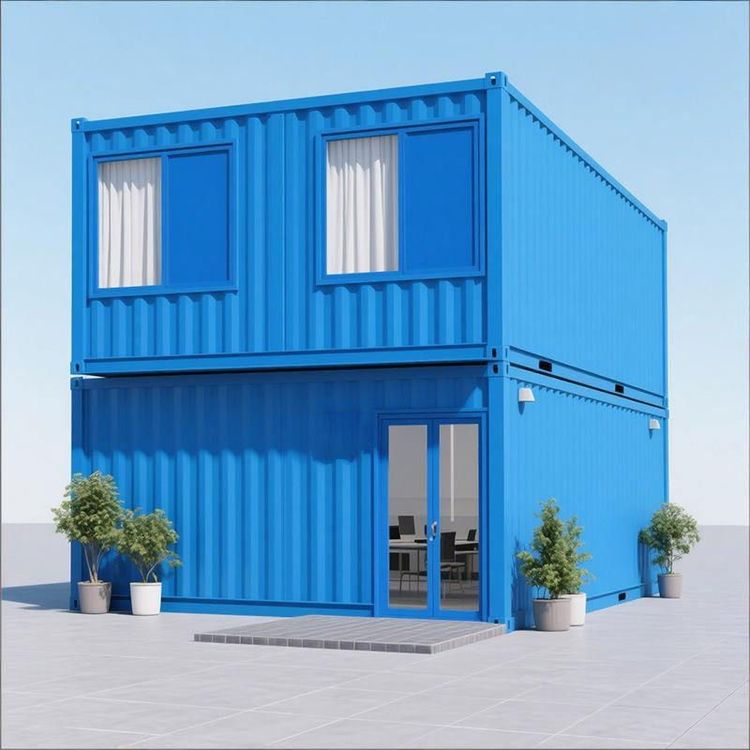
2008 Container Relief Housing
During the 2008 Wenchuan earthquake, containers were used for the rapid construction of relief housing, becoming an important solution for temporary post-disaster settlement. Its application background, transportation methods, and actual effects can be analyzed from the following aspects:

1. Emergency Deployment Background of Container Relief Housing
After the 2008 Wenchuan earthquake, there was an urgent need for temporary settlement facilities in the disaster-stricken areas. Containers were selected as one of the main forms of relief housing due to their standardized structure, rapid assembly characteristics, and certain structural strength. Such housing not only met the basic living needs of the victims but also took into account safety and durability to cope with secondary disasters such as aftershocks. For example, the railway department transported containers as core components of mobile housing to the disaster areas by operating special trains with the prefix 'Fang' (meaning 'housing'), demonstrating its efficient allocation capabilities in emergencies.
2. Efficient Guarantee Mechanism of Railway Transportation
To ensure the rapid arrival of relief supplies, the railway system implemented a priority transportation strategy for special trains with the prefix 'Fang'. By May 28, 2008, the railway had transported a total of 51,500 sets of mobile housing, with container special trains accounting for a significant proportion. Compared with special trains with the prefix 'Qiang' (meaning 'rescue'), the operation standards of 'Fang' trains were higher, including priority marshalling and accelerated passage, minimizing transportation time. This hierarchical transportation mechanism reflected the scientific and targeted allocation of resources in post-disaster relief.
3. Practical Application Effects of Container Housing
The modified container housing played multiple roles in the disaster areas:
- Structural Safety: Containers, made of steel, have impact resistance, wind resistance, and rain resistance capabilities, enabling them to withstand aftershocks and severe weather, providing a relatively stable living environment for the victims.
- Service Life: Compared with traditional tents, the durability of container housing was significantly improved, with some modified houses being used for a long time after the disaster, reducing the cost of secondary settlement.
- Functional Expandability: Through interior decoration, containers could be equipped with lighting, ventilation, and other facilities, with some even having simple kitchens or sanitary areas, enhancing the comfort of temporary living.
4. Innovative Significance of the Relief Model
The application of container relief housing marked the transition of China's post-disaster relief from 'emergency settlement' to 'sustainable settlement'. Its modular design facilitated rapid construction and dismantling, buying time for subsequent post-disaster reconstruction while reducing the generation of construction waste, reflecting the concept of green relief. This model also provided replicable experience for subsequent natural disaster relief efforts.